Tuesday, November 29, 2011

Korea's 3 traditions added to UNESCO list !

This is a big hearty news for Korea and the Korean fan who loves all about Korea.Korea’s traditional martial arts, tightrope walking and ramie weaving have been listed as intangible heritages.UNESCO’s Intergovernmental Committee inscribed the three Korean traditions in the Representative List of the Intangible Cultural Heritage of Humanity at a session held in Bali, Indonesia, Monday.


With the new listing, South Korea has accumulated 14 intangible cultural heritages since 2001.

The three items were among six cultural traditions promoted by the Korean government for registration. The martial art, or “taekkyeon” in Korean, and the tightrope walking, or “jultagi,” were expected to be listed as they were recommended for registration at the stage of primary screening. The weaving of fine ramie from Hansan region, or “Hansan mosi,” was reserved at the beginning but included in the last minute.

The excluded three traditions were royal cuisine of the Joseon Kingdom, “seokjeondaeje,” or a Confucian ritual ceremony, and nacre craft.

Taekkyeon: Taekkyeon, the world’s first martial art to become the UNESCO-authorized intangible heritage, utilizes techniques with fluid, rhythmic dance-like movements to strike or trip up an opponent.

There are about 50 certified practitioners currently, and the Korean Taekkyeon Association plays a role in transmission of the martial art.

The committee decided that taekkyeon was qualified for registration because it is “a traditional martial art that has been passed from generation to generation and promotes cooperation and solidarity among its practitioners.” At the same time, the “inscription of taekkyeon on the Representative List could improve the visibility of similar martial arts around the world as an intangible cultural heritage,” it said.

Jultagi: Korea’s jultagi is different from tightrope walking performances in other countries in that it is accompanied by music and witty dialogue between the walker and another clown on the ground.

The tightrope walker presents acrobatic feats along with jokes, songs and dance, while the earthbound clown adds to the amusement by making witty remakrs.

The committee saw jultagi valuable as it is “a traditional performing art of great complexity that integrates musical, choreographic and symbolic expressions of Korean culture to delight and entertain audiences” and it is “a testimony of human creativity and its inscription on the Representative List could contribute to promoting intercultural exchange by drawing attention to the different types of tightrope walking worldwide.”

Hansan mosi: Hansan mosi is high-quality woven ramie clothing produced in Hansan in South Chungcheong Province, a favorite item in summer.

Weaving mosi, by female family members, requires a complicated process, including harvesting, boiling and bleaching ramie plants, spinning yarn out of ramie fiber, and waving it on a loom. The production, often done together with neighbors, also binds the community together, UNESCO source.

Hansan Ramie the Korean fabric Joins UNESCO Intangible Heritage List

Ramie fabric has kept Koreans cool during the sultry summer months for the past 1,500 years. Now the weaving of fine ramie in the Hansan region of Korea, a tradition that has come to symbolize the perseverance of Korean women, has been registered as an Intangible Cultural Heritage of Humanity. The craft has attained the same level of recognition as carpet weaving in Iran and Azerbaijan.

Bang Yeon-ok, a designated intangible cultural asset master, weaves ramie in Seocheon, South Chungcheong Province. /Yonhap The Cultural Heritage Administration said Monday that taekkyon, tightrope walking and the weaving of fine ramie in the Hansan region were included on the list during a meeting of UNESCO delegates in Bali, Indonesia.


Taekkyon is the first martial art ever to be registered on the list. Both it and traditional Korean tightrope walking were widely expected to be registered after being recommended by a UNESCO subcommittee.

But the application for ramie weaving was put on hold as the subcommittee said it required more information supporting Korea's bid. However, in a dramatic reversal, UNESCO approved it during its main session after Korean officials filled in the gaps.

As a result, Korea now has 14 intangible traditions on the UNESCO list. They include the Royal Ancestral Ritual at the Jongmyo Shrine and its Music (2001), the Pansori Epic Chant (2003), the Gangneung Danoje Festival (2005), and the Ganggangsullae Dance (2009).

Also on the list are the Namsadang Nori Performance, Yeongsanjae Buddhist Ritual, Jeju Chilmeoridang Yeongdeunggut Shaman Ritual, and Cheoyongmu Dance (all registered in 2009); and Korean traditional wooden architectural craftsmanship or daemokjang, songs based on traditional poetry from the Chosun era or gagok, and falcon hunting (in 2010).

Fine ramie from the Hansan region in South Chungcheong Province is a popular fabric for summer clothing due to its light weight and cool texture. But producing the fabric is highly labor-intensive. There are at least six different stages to the process, from gathering ramie plants to bleaching them, and a craftswoman has to spend three months weaving the filaments into fabric.

Ramie plants are also grown without herbicides, as it requires using lips and teeth to rip them into fine strings.

In the 1960s, many households in the Hansan region made their living by weaving ramie, but the craft faced extinction when Korea was flooded with synthetic fibers in the 1970s, and another onslaught by cheap Chinese ramie in the 1990s. It began to receive attention again during the mid-1990s.

The fabric is a specialty of Seocheon, whose government operates a center dedicated to promoting its fine quality and works to prevent this piece of cultural heritage from falling by the wayside.

Monday, November 28, 2011

My Dokdo is Korea

Dokdo one of the precious lone Island little away from East Cost beautiful Island called Ulleungdo.Over the past many years Dokdo has been contoversial issue . Dokdo ("독도" in Korean)or the Dokdo island is a group of islands in the East Sea . These islands are collectively called Dokdo and the name means a "rock island." It has been a Korean territory throughout all known history except during the Japanese occupation of Korea between 1905 and 1945.


Dokdo is also called Liancourt Rocks after the French whaling ship, Le Liancourt, which rediscovered Dokdo on January 27, 1849. The Japanese name for Dokdo used to be Matsushima (松島) until 1905, at which time it was renamed as Takeshima (竹島) along with a Japanese territorial claim .
Dokdo has been under the control of South Korean since August 15, 1948, on which the Korea-based U.S. XXIV Corps transferred Dokdo to the newly born Republic of Korea.
Dokdo is actually composed of two islands -- east and west -- and surrounded by around 90 rock formations.


The two islands lie around 150 m apart. According to the maritime police guarding Dokdo, the water separating the two is very shallow -- it never dips below 2.0 m -- and traversable on foot, but the narrow channel is usually crossed by boat for safety reasons.


The South Korean government asserts that Korea has owned Dokdo all along since the beginning of known history. For this you can find at http://www.korea.net.

Dokdo and Ulleungdo are visible from each other. Anyone living in Ulleungdo for long enough knows that Dokdo is out there, at present people feel more connection and protecting Doko. Over many years Ulleungdo people are promoting Dokdo and sending messages to the mainlands and the people who comes to visit the island.

Tracing back from the past : Korean people lived in Ulleungdo since prehistoric times. Three Korean style dolmens (고인돌; goindol) attributable to a period between about 300 B.C. to about 1 A.D. have been located in Ulleungdo. Dolmens are ancient tombs of the bronze age and the early iron age. The Korean peninsula contains about 40 % of all dolmens in the world. The majority of the rest of the dolmens are within Manchuria, which was within the territory of the ancient Korean kingdom of Gojoseon ( ~ 2333 B.C to 108 B.C.). The dolmens prove that Koreans lived in Ulleungdo at that time.

Check out at http://blog.dokdo.korea.com/?page=2 for further archeological details.
Photo above: An example of a Korean dolmen.


The rock carvings at Bangudae (반구대), Ulsan in Korea, shows images of whaling ships that accommodate about 20 sailors. If the ancient Koreans could sail to Ulleungdo to live there even if they cannot see Ulleungdo from the Korean mainland, surely they must have sailed to Dokdo that they could see from Ulleungdo.
Photo to the left:
Scholars believe that the rock carvings at Bangudae were made between the neolithic age and early iron age over a period of time.


Shilla, a Korean kingdom, conquered and annexed the local kingdom of Usan-guk in 512 A.D.


The first written reference to Dokdo appears in a Korean history book titled "Samguk Sagi" (삼국사기, 三國史記; meaning "History of Three Kingdoms") which was compiled in 1145 A.D. According to Samguk Sagi, Isabu, a general of Shilla, conquered and annexed "Usan-guk," which refer to Ulleungdo and Dokdo collectively.


Dokdo is included in Usan-guk.


Usan-guk includes the two islands of Mulleung and Usan, according to old Korean records such as "Sejong Shillok Jiriji," a publication in 1454 A.D. According to this record, the two islands are separated far enough so that they can be seen from each other only on a clear day. Only the pair of Ulleungdo and Dokdo satisfies this condition in the East Sea.


The [Korean] Ministry has developed an auxiliary textbook called “Getting to Know Dokdo” (독도바로알기) for all sixth grade students nationwide beginning the middle of this month. The textbook has over 60 pages of information about Dokdo’s natural environment and geography.

The textbook will be given the second-year middle school students and first-year high school students later this year, for a total of 60,000 to 70,000 copies. When students begin school they will use the textbook to begin learning about Dokdo’s history, geography, and international law in order to learn about Korean sovereignty. Gwon Yeong-min, head of the northeast Asia history research team in the Ministry, said that “this textbook was developed so that Dokdo education will be included in all ethics, social studies, and history courses… teachers may use the textbook in their regular classes or use it for original physical activities or other school events.”


The Ministry is expanding the number of “Dokdo Base Schools”. Beyond the current 62 participating schools, another 5 overseas Korean schools will be added this month. These schools will have clubs called “Protecting Dokdo Group” and “Loving Dokdo Group”, and have meetings on Dokdo research, lectures by visiting experts, and exhibitions. The schools will receive support from the Ministry.

There is also the online program “Dokdo Cyberclassroom” for teachers. The program teaches about the incidents in the history of Dokdo and Japanese incursions onto dokdo, and by this year had been viewed by 2,100 teachers. The Ministry also has the nationwide touring program “Dokdo Exhibition” which has been attended by 95,000 ordinary citizens.

Though the Ministry has strengthened Dokdo education in the style of a department store, many believe that regular classes need to be changed to show real effectiveness. This is because there are limits to Dokdo education carried out outside of regular classes, such as original experiences or school events.

Currently Dokdo-related materials are taught in elementary, middle, and high schools in ethics, social studies, and history classes. Elementary schools mainly begin by having Dokdo pictures in third and fourth grade textbooks, and middle schools teach that “Dokdo is within our borders and is therefore a part of the history of our territory.” In high school students learn in history class that Dokdo has been a part of our territory since the Three Kingdoms period and in geography class they see ancient maps and documents and learn that Dokdo is our territory. The Ministry plans to increase Dokdo understanding in textbooks and other materials in social studies and ethics classes.

Even before the distortions in Japanese textbooks there were strong voices for proper Dokdo education in our textbooks. The Ministry announced in May that it would correct minor errors regarding Dokdo in middle and high school textbooks. The materials in question were four pages in a social studies book, three pages in society, and one page each in history and Korean. The erroneous textbooks had errors regarding Dokdo’s longitude, latitude, and surface area and its unofficial designation.


Depending on weather conditions, visitors are usually only granted access to Dokdo for about 50 days each year. That means many are forced to turn back without ever setting foot on the islands.


Dokdo, Korea's eastern most territory, is open to both Koreans and foreigners, but the latter must go through a routine application process to gain admittance.
Although many foreign tourist visit Dokdo through Ulleungdo to see the glimpse of twin sister.

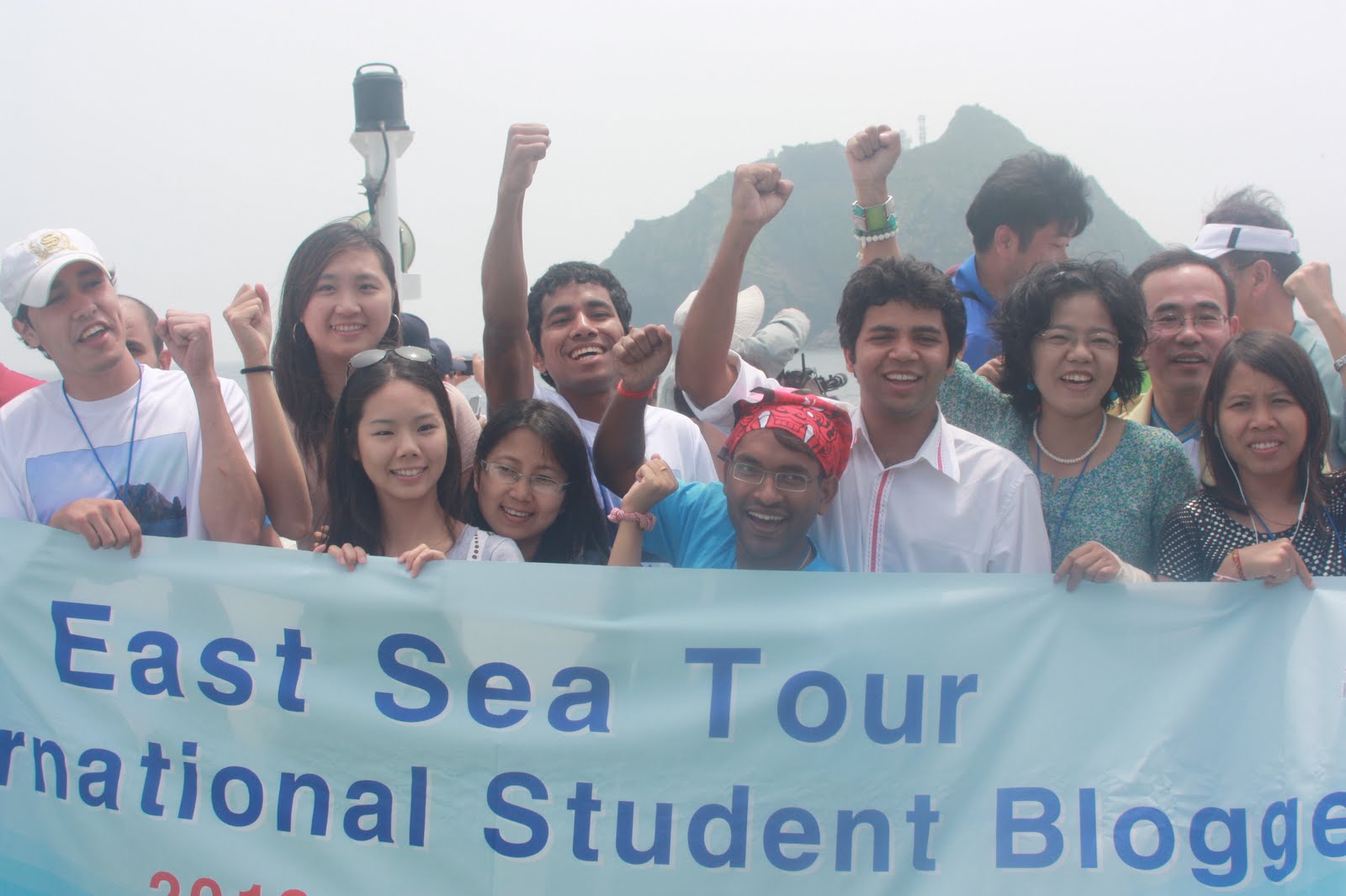
Please do visit Korea's Dokdo Island , as I find solace and lucky to be there with my other friends through Misnistry Of Korea Tourism who fecilitate to take us there. One of my precious and unforgettble moment which I am still cherishing and sharing to you all with some of my knowledge about Dokdo Island.

Friday, November 25, 2011

Three-Kingdom Era: Koreans bring culture to Japan


Korean Peninsula, Manchuria brace for three-way competition for 700 years


This is the second of a 10-part series on Korean history from its mythological, ancient beginning until the present day. This project is sponsored by several companies and public agencies including Merck Korea, eBay Korea, Daewoo Securities and Korea Post. ― ED.

After Korea’s earliest state Gojoseon fell in BC 108, three major powers rose up in Manchuria and the Korean Peninsula over the next 100 years to rule the region for much of the first millennium.


Goguryeo took charge of the northern part, while the southern part of the country was divided between Baekje in the west and Silla in the east. This period of three states has become known as the Three-Kingdom Era and marks a period that was rich both spiritually and culturally.

Although the three kingdoms were ruled by different kings in different ways, all of them were composed of ethnic Koreans and they had languages, religions and culture in common.

In particular, all three eventually accepted Buddhism, starting with Gorguryeo, then Baekje, and finally Silla. In addition, Confucianism was also introduced during this era. This also means that Chinese characters were used.

Throughout some 700 years, their rivalry was as dramatic as anything we could expect to find in a movie ― it involved long-term partnerships via marriages, brutal warfare, and betrayals.

For example, the smallest state, Silla, expanded its territory and defeated its two bigger rivals during the 7th century by making an alliance with the Chinese Tang dynasty forces. Silla later drove away its Chinese ally, who thought it would then take Korea over for itself, and instead, Silla established a unified dynasty on the Korean Peninsula.


Goguryeo ― northern defense line

Throughout the Three-Kingdom Era, Goguryeo maintained by far the biggest lands covering much of Manchuria, as well as the northern part of Korea. Initially, it was the most powerful among the three states.

The country’s fortune reached its peak in the 5th century under the rule of one of only two Korean kings who has the title “Great” in his official name: King Gwanggaeto the Great.

King Gwanggaeto expanded his nation northward so as to occupy the Liaodong Plains in Manchuria. There is a big stone stele in northeastern China, which praises his performances, erected by his son.

For the next century Goguryeo was a dominant force, and with its strong military power it set up the northern defense line of Korea under which its southern brothers and sisters could be protected from an invasion by Chinese forces.

During the 7th century the country withstood full-scale attacks from Chinese forces, the most powerful in the world back then. It eventually fell in 668 when Tang forces were united with those of Silla in the South.

From a cultural point of view, Goguryeo had great respect for the teachings of Confucianism and even had its own Confucian academy to train the sons of aristocrats.

Baekje ― mentor of Japan

Baekje was built around the Han River, now modern-day Seoul, by two sons of Goguryeo’s founder. They are recorded as having fled a succession clash and after fleeing south, conquered nearby chiefdoms to take over southwestern Korea including the Han River area.

It was not Goguryeo but Baekje that has stood out first on the peninsula as it was stronger in the 4th century. Back then, the country dominated most of the western part of the peninsula.

However, its fortune waned in the following century with the rise of Goguryeo, and Baekje was forced to move its capital from the Han River area to more southern cities twice. It collapsed in 660 due to the allied attack of Silla and Tang forces.

The nation was famous for having the most advanced religious and artistic culture among the three kingdoms, and it was Koreans from Baekje who were responsible for transmitting Chinese characters, Buddhism, and Confucianism to Japan.

Ajikgi and Wang In are the two Koreans recorded in the earliest Japanese historical records for having brought their superior culture and Chinese writing to the Japanese. Meanwhile, Buddhist missionaries from Baekje brought their religion, as well as their advanced knowledge of art and architecture.

Silla ­ the winner takes all

In the southeast of the peninsula, Silla absorbed nearby city states to become the strongest power there. It was initially the smallest and weakest in the three-way rivalry, and formed an alliance with Baekje in 433 in the face of the threat of Goguryeo.

Strengthened by marriages between royal families of the two countries, the cooperation lasted for 120 years through the mid 6th century.

However, Silla broke the time-honored partnership in 553 by attacking Baekje to take the area surrounding the Han River, which prompted Baekje to join hands with Goguryeo.

In answer, Silla formed an important relationship with the Tang Dynasty to destroy its two rivals in the 660s, and it ousted its Chinese allies out of the peninsula to assume the lands south of Pyongyang.

During the 7th century Korea saw two of its greatest Buddhist philosophers, Wonhyo and Uisang, whose ideas were influential in China. Both emphasized harmony and equality.

In addition, the great Bulguksa Temple (which means ‘the country of Buddha’) was constructed as well as the famous Seokguram Grotto. Both Bulguksa and Seokguram Grotto have been added to the UNESCO World Heritage list.

Korea’s easternmost islets of Dokdo

History books say that Silla conquered Usan-guk in 512, which was based on Ulleungdo in the East Sea. Korean scholars believe that the event made Dokdo belong to the country.

Dokdo is a set of volcanic islets situated in about 90 kilometers east of Ulleung Island where people can see Dokdo with naked eyes when the weather is clear. In contrast, the closest Japanese land is up to 160 kilometers away where Dokdo cannot be observed with human eyes even when the weather is super clear.

It has been under the control of Korea with armed policemen stationed there but Japan claims sovereignty on Dokdo, which the country calls Takeshima, by coming up with various logics.

Dokdo, also dubbed the Liancourt Rocks, has emerged as bone of contentions between the two countries through various events.

Dr. Kevin N. Cawley is currently the Director of the Irish Institute of Korean Studies at University College Cork (UCC), Ireland - the only institute in Ireland dedicated to promoting Korean studies ― funded by the Academy of Korean Studies, South Korea. He was previously a Gyujanggak Fellow at Seoul National University.


In detail

Goguryeo (BC37 ­ AD668):
An ancient Korean kingdom in the northern Korean Peninsula and Manchuria

Baekje (BC18 ­ AD660):
A kingdom in southwest Korea

Silla (BC57 ­ AD935):
A kingdom in southeast Korea

Liaodong Plains:
Plains located in the northeast of China

Pyongyang:
Currently the capital of North Korea. It is located at the heart of the country.

Tang Dynasty (AD618-907):
An imperial dynasty of China, which flourished in terms of cultural capacity and military power.

Han River:
A major river in South Korea flowing through its capital Seoul.

King Gwanggaeto the Great:
The ninth monarch of Goguryeo. Over his reign between 391 and 413, he has expanded territory greatly to make Goguryeo become a super power of East Asia. He died in 413 at the age of 39.

Ajikgi and Wang In:
Scholars of Baekje. They taught the Japanese people the Chinese letters and the Confucianism.

Wonhyo and Uisang:
Buddhist monks and great philosophers of Silla. They were close friends.

Bulguksa Temple:
A big temple built by Silla in its capital. It is enlisted at the UNESCO World Heritage.

Seokguram Grotto:
A hermitage as part of the Bulguksa temple complex. It is added to the UNESCO World Heritage.

Usan-guk:
The country based on Ulleungdo and the nearby islands during the Three-Kingdom Era. Silla occupied it in 512.

Dokdo:
Korea’s easternmost volcanic outcrops. Both Korea and Japan claims Dokdo but Korea has strong grip on it, which is located about 90 kilometers southeast of Korea’s Ulleungdo.

Source: The Korea Times

Thursday, November 24, 2011

Observations of time


BUNDANG, Gyeonggi Province — Photographing another photographer, especially an artistic inspiration and mentor, is never an easy task. Rather, it can be intimidating and nerve wracking.

However, Koo Bohnchang turned this experience into a memorable one, filled with ease and great conversation.

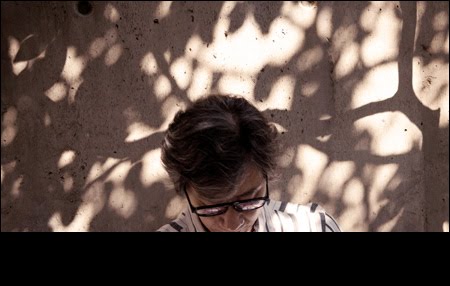
The shoot took place at his modern home-studio, built with tall windows and a Zen garden. The trees by the gate created beautiful shadows, inspiring a rich backdrop for Koo’s portrait. The artist’s reflective nature and gentle spirit instilled his presence with a quiet strength, similar to that felt in his photographs.


There was a certain elegance about the way Koo spoke and moved. Dressed in a white button-down shirt, black vest and khakis, his black-rimmed glasses framed his observant eyes. Soft mid-day light hit his studio window, revealing all the dust and scratches. Waiting for the perfect moment when his eyes aligned with that streak of sun against the window, the camera seemed to weigh heavier.

When Koo’s eyes did meet the sun or the camera lens, it was worth the wait. Sometimes you make things happen — a photograph, or a moment. Then there are times that you wait, and allow them to create themselves. The portrait session with Koo revealed that sincere observation takes time, as do all meaningful things in life.

Jesse Chun is a fine art photographer whose works have been exhibited and published internationally. Chun earned a bachelor of fine arts degree in photography from Parsons School of Design in New York. Visit www.jessechun.com (fine art) or www.jessechunphotography.com (editorial).

Tuesday, November 22, 2011

Korea's 2040 generation, onscreen and on the pages

Faced with uncertain prospects birthed by the worldwide trend of the jobless economic recovery, the young people of Korea have redefined themselves as a politically and socially potent demographic. A 2010 opinion poll conducted by the Ministry of Culture, Sports and Tourism of 1000 young people in their 20s found that the primary issue of concern among respondents was employment.

Following with these developments, the term “2040 generation” has emerged not only as a buzzword in Korean media and social commentary but also a theme of contemporary culture. The unprecedented turnout of “2040” voters in the recent 2011 Seoul mayoral election, in particular, was seen as an effort by younger generations to engage the wider society in a much-needed dialogue on their needs. At the same time, books, dramas, and movies depicting the struggles and dreams of young Koreans in their 20s, 30s, and 40s, continue to attract a wide audience of viewers and readers..


The 2040 generation, which refers to young people in their 20s, 30s, and 40s, is emerging as a significant political, social and cultural demographic in Korea today (Photo: Weekly Gonggam).


The 880,000 Won Generation, an economic critique published in August 2007, sold a record 25,000 copies within months of publication and launched the self-help and self-improvement book boom in Korea. The book, titled after the average relative pay rate that individuals in their 20s were estimated to receive in 2007, traced the economic and social history of the decade following the financial crisis. Its analysis focused on the widening generation gaps and structural inequalities that have made for the socioeconomic challenges faced by twentysomethings today.

“Our time is short, but it is not too late,” wrote Woo Seuk-hoon, the author of The 880 Thousand Won Generation. “Now is the best time to free ourselves from the mire, from the pull, of ‘winner-takes-all.’ Now is our chance to act, and for whom? For our youths? It may appear so, but as we may suspect and soon discover, the changes will be for all of us and our shared future.”

The present reality of Korea’s younger generations has also played out on film and television.

The popular 2010 romantic comedy My Dear Desperado paired a provincial university graduate preparing for employment with a small-time gangster. Sae-jin, played by Jeong Yumi, having graduated with top honors in data processing and successfully completed her master’s degree, comes to Seoul to find a job that will make good use of her professional skills. Nevertheless, she soon finds that a degree from a provincial university lacks the minimal name brand value esteemed by potential employers. With few interview opportunities, Sae-jin settles into a lifestyle of part-time jobs and monthly rent in a semi-basement one-room, and together with neighbor Dong-chul, played by Park Jung-hun, she seeks her own way in the big city.


Third-rate gangster Dong-chul (left, played by Park Jung-hun) and provincial university graduate Sae-jin (center, played by Jung Yu-mi) are neighbors seeking to make a life for themselves in Seoul in the film My Dear Desperado. In the drama series Protect the Boss, No Eun-seul (second to right, played by Choi Kang-hee) agrees to work as a secretary and bodyguard to Cha Ji-heon (far right, played by Ji Sung) on the condition that she receive official status as a regular employee (Photo: Gonggam Weekly).


In the SBS drama Protect the Boss, No Eun-seul, played by actress Choi Kang-hee, also hails from a provincial university outside of Seoul. After a series of twists and turns working a racket of temporary jobs to make her rent and pay back tuition loans, Eun-seul is recruited as a secretary, bodyguard, and all-around girl Friday to the immature youngest son of a corporation owner. The best part of her compensation is the official certificate identifying her as a regular employee.

MBC sitcom Highkick! The Revenge of the Shortlegged features a similar situation. Actress Baek Jin-hee plays a plucky heroine of the same name, who keeps herself busy at various part-time jobs to keep up with her loan repayment but finds herself at a loss after a plan to lease her own place falls through. While the slapstick genre makes for some exaggerated plot developments and scenarios, viewers can sympathize with the “real-life” difficulties and triumphs that Jin-hee experiences.

The heroine in Scent of a Woman, which ran on SBS in 2010, finds herself at a different stage of life than young Jin-hee, but her struggles attest both to similarly deferred dreams and a similarly forged resilience. Lee Yeon-jae, played by Kim Sun-ah, had it relatively easy when she was hired with a high-school education as an employee at a travel agency. But after ten years of making the best of the less-than-satisfactory working conditions and treatment by her boss, Yeon-jae receives a notice of dismissal. For the first time since she was hired, she gives voice to her aches, as she implores her boss for just a little more trust, a little more respect, and a little more care.

Among the bestsellers currently up for selection as the best books of 2011 by various online book retailers such as Interpark Books and Yes24, several rose to popularity on account of their direct, relevant, and even compassionate message about the issues and attitudes of younger generations.


Michael Sandel’s Justice: What’s the Right Thing to Do? is based on the Harvard professor of political philosophy’s popular lecture series. Since its release in 2010, the book has sparked conversations in Korea on the relationship between rights and justice and the meaning of morality in government, economics, and other sectors of society. Having sold over a million copies in Korea, Justice and the questions it poses have resonated with and fostered a deep cross-generational interest in the topic.

The ten books written by Alain de Botton, who has been dubbed “the philosopher of our daily life,” have also sold more than a million copies in Korea, which has the largest readership for Botton’s work outside of his native England. Among his bestsellers, the popular Status Anxiety explores why people care about status and how the drive to compare and envy can be harnessed for productive and positive means.

We Call It Youth Because It Hurts, written by Seoul National University professor Kim Nan-do, has sold over a million copies since its publication and remained at the top of national bestseller lists for 20 weeks. A collection of practical counsel and encouragement written for young people struggling with their uncertain futures, the book builds on the belief that such worries and longings afford a value to youth that cannot be found anywhere else.

While themes of intergenerational conflict continue to appear in the media, a steady wave of books and films has drawn attention to the idea of social progress as a sometimes bumpy and often trial-ridden path that yields particular pains and joys within and across generations. In a recent interview with Weekly Gonggam, Ham In-hee, a professor of sociology at Ewha Womans University, put it this way: “In our present situation, it is important to define the relationships among generations not by conflict and confrontation but by cooperation. Seeking out the wisdom of harmonious coexistence, of life lived together, will require all of our combined energies.”

Source: Korea.net

Exhibition marks 1,000 years of Buddhist scripture


For the Buddhist community, this year has been the year of the millennial anniversary of the Tripitaka Koreana, the world’s oldest Buddhist canons in Chinese script carved onto 81,258 wooden printing blocks in the 13th century.
UNESCO described the Tripitaka Koreana as “one of the most important and most complete corpus of Buddhist doctrinal texts in the world.”

Various museums across the country have been celebrating the landmark year with special exhibitions, the latest of which is being held at the National Palace Museum of Korea until Dec. 18.

Organized by the Cultural Heritage Administration, the exhibition shows rare original copies of texts that served as the basis for the Tripitaka Koreana during the Goryeo Kingdom (918-1392).

A little background knowledge of Tripitaka Koreana is key to appreciating the exhibition.

It was believed that the scriptures would be helpful in guarding the country from foreign aggression. So the Goryeo Kingdom started to establish the wooden canons, but they were burned by Mongolian forces in 1232. The Tripitaka Koreana, stored at the Haein Temple in South Gyeongsang Province, was reconstructed as a replacement. Fortunately for posterity, the original texts of the burned canons still survive in various locations here and in Japan.

Excerpts from these texts and related artifacts are being shown at the ongoing exhibition at the National Palace Museum of Korea.
The exhibition is also an event to mark the 50th anniversary of the Cultural Heritage Administration.

Over 40,000 artifacts from the palaces of Joseon Kingdom (1392-1897) and the Korean Empire (1897-1910) are on display at the museum in Gwanghwamun, central Seoul. Admission is free.

For English speakers, there is a guided tour at 3 p.m. The museum is open daily, except for Mondays. For more information, visit www. gogung.go.kr or call 02-3701-7500.